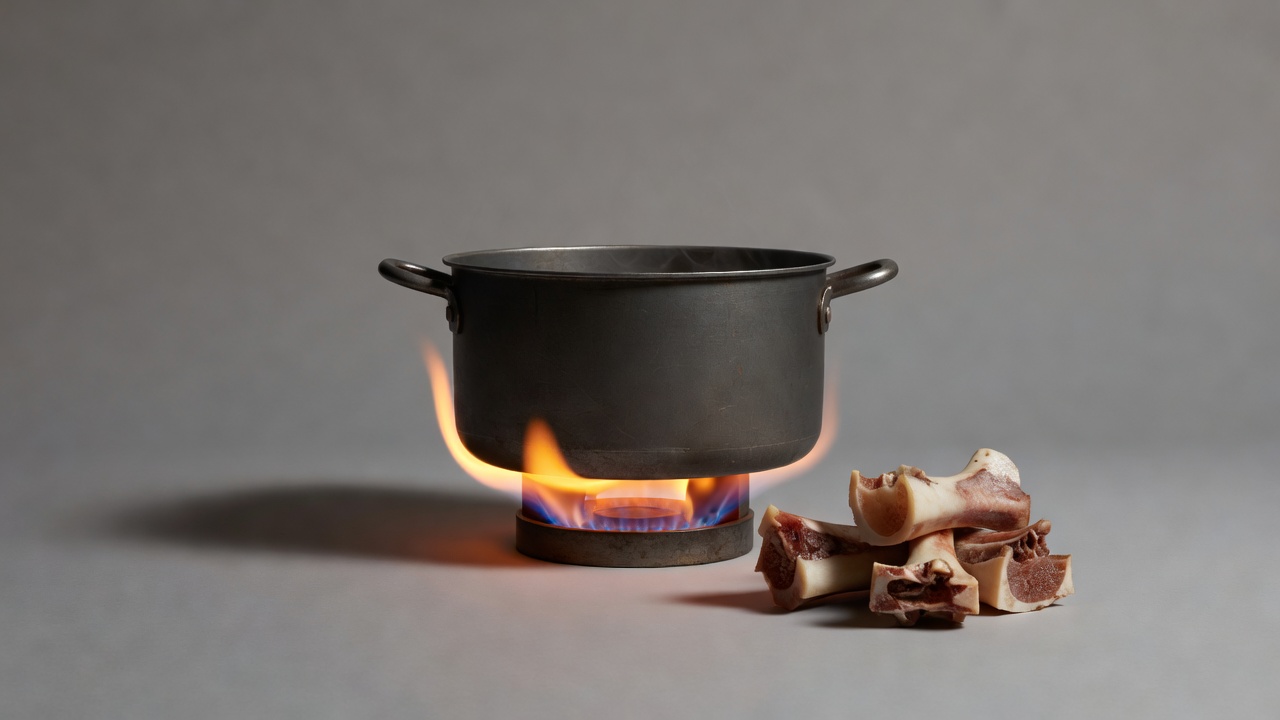
Auguste Escoffier opened his Le Guide Culinaire (1903) with stocks because, in his words, stock is everything in cooking. He called them fonds de cuisine, the foundations of the kitchen. Soup houses take that literally. Their whole menu stands on one foundation, so they cannot afford to get it wrong.
01 Choose the bones
Bones give gelatine, which is what makes a broth feel full on the lips. Knuckles, feet, necks and joints carry the most collagen. Marrow bones give richness and fat. Pho cooks in Hanoi use beef leg and marrow bones; Fukuoka tonkotsu shops use pork trotters, heads and back bones; Marseille fish kitchens use whole small rockfish, heads and all. Chicken stock relies on wings, backs and feet.
02 Blanch and rinse
Many Asian kitchens start by covering the bones with cold water, bringing them to a boil for several minutes, then pouring everything away and scrubbing the bones. This removes blood and loose proteins that would cloud the pot. It costs ten minutes and saves an hour of skimming. French kitchens are more likely to skip this for brown stocks, where the bones are roasted first instead.
03 Start cold
Bones go into cold water and come up to temperature slowly. As the water warms, proteins coagulate and rise as grey foam. A cold start lets them gather at the surface where they can be lifted off, instead of being broken into the liquid by sudden heat.
04 Skim, then lower the flame
Skim the foam patiently as it rises, then lower the heat until the surface only shivers, a few bubbles breaking at one side of the pot. This is the simmer. A clear broth such as pho, French consommé or Japanese chicken paitan's lighter cousin, chintan, depends on it. Boiling hard churns fat into the liquid and turns it cloudy and heavy.
05 Know when to break the rule
Tonkotsu breaks the rule on purpose. Fukuoka cooks boil pork bones at a hard, rolling boil for twelve hours or more, topping up with water, so that fat and dissolved collagen emulsify into an opaque, creamy liquid. Bouillabaisse also uses a fierce boil, which is how the olive oil binds with the fish stock. The name itself records the method: boil hard, then lower.
06 Add aromatics at the right moment
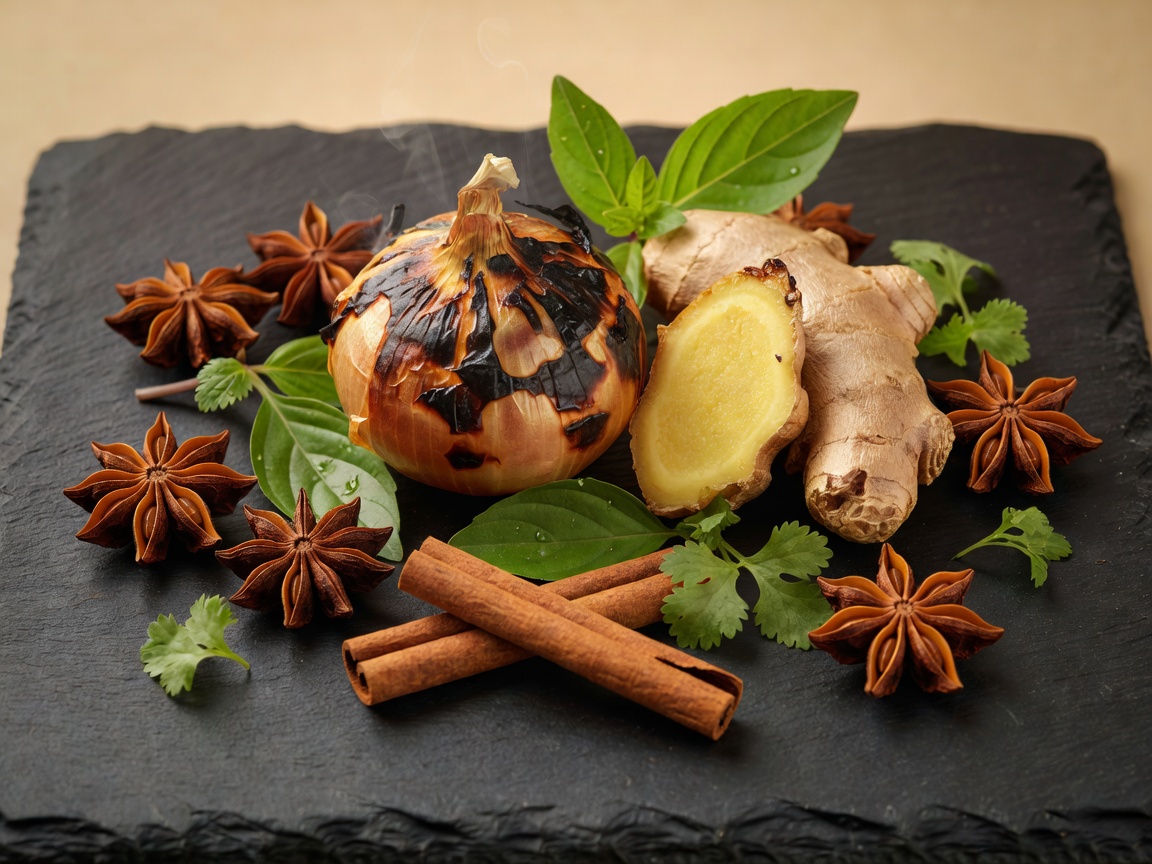
Aromatics added too early turn bitter or vanish. For pho, onions and ginger are charred whole over flame until blackened, then peeled and added; the spices are toasted dry and go in for the last hour or two in a muslin bag. French stocks use a mirepoix of onion, carrot and celery with a bouquet garni of thyme, bay and parsley stalks. Japanese dashi uses kombu soaked in water just below a simmer, removed before the boil, then a brief steep of katsuobushi flakes.
07 Clarify, if the house demands it
For a perfectly clear consommé, cooks build a raft: minced lean meat, egg whites and vegetables stirred into cold stock and brought slowly to heat. The raft rises, traps every particle and leaves the liquid below as clear as tea. Few soup houses go this far daily, but the principle, that clarity is earned by slow heat, applies everywhere.
08 Strain, season late, store safely
Strain through a fine sieve or cloth without pressing the solids. Season at the end, because salt concentrates as stock reduces; fish sauce for pho, tare for ramen, salt and a touch of acid for borscht. If you are cooking at home, cool stock quickly in shallow containers and refrigerate it within about two hours; food safety agencies across Europe and elsewhere give similar guidance. Bring it back to a full boil before serving.
What this means at the table
Once you know the steps, a bowl starts to speak. A cloudy pho tells you the pot boiled. A thin tonkotsu tells you it did not boil long enough. A borscht with no sour edge is missing its finish. You are not judging the cook; you are reading the ledger in the bowl.