The signs of a true soup house
Look for three things. First, the menu fits on one board, and the board names sizes or cuts rather than dishes. Second, the stock is visible or at least audible: a steel pot behind the counter, a steam line above the door. Third, the house closes when the pot is empty. A kitchen that sells out at two in the afternoon is telling you it made the broth that morning and will not stretch it with water.
Price is a weaker signal. Some of the best bowls in the world cost less than a coffee in the city where they are sold; some cost a full dinner because the fish was bought that day. What links them is focus.
Houses and the bowls they keep
Phở Gia Truyền · Bát Đàn Street, Hanoi
A family pho shop in the Old Quarter known for its queue. You pay and carry your own bowl. Phở tái chín, with rare and well-done beef, is the classic order.
Phở Thìn · Lò Đúc Street, Hanoi
Famous for beef stir-fried with garlic before it meets the broth, giving a darker, smokier bowl than the Old Quarter norm.
Yatai stalls · Nakasu, Fukuoka
Open-air stalls along the river that appear at dusk. Hakata tonkotsu ramen, thin noodles and a seat elbow to elbow with strangers.
Shin-Yokohama Ramen Museum · Yokohama
Opened in 1994, a rebuilt Showa-era street where regional ramen shops serve half-size bowls so you can compare schools side by side.
Bouillon Chartier · Paris
Opened in 1896 in the tradition of the bouillons begun by butcher Pierre-Louis Duval in the 1850s: halls that fed working Paris with beef and broth.
Chez Fonfon · Vallon des Auffes, Marseille
A fish house in a tiny fishing cove, long associated with the Charte de la Bouillabaisse. Order ahead; the fish is chosen the same day.
Minho tascas · Braga and Viana do Castelo
Small family taverns where caldo verde arrives in an earthenware bowl before anything else, with a slab of broa cornbread.
Ukrainian canteens · Kyiv and Lviv
Working lunch rooms where borscht comes as the first course, with smetana on the side and garlic pampushky in a basket.
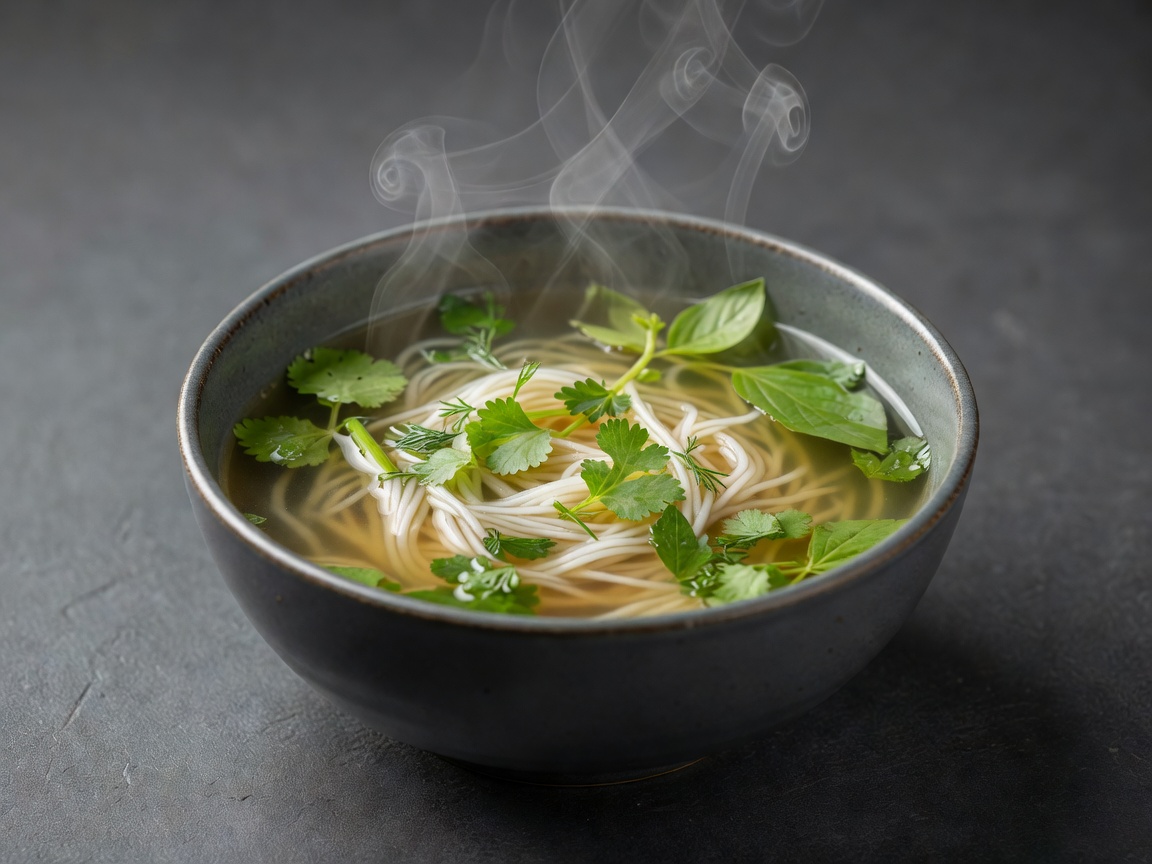
How these rooms are run
Most soup houses keep a working day that starts before dawn. In a Hanoi pho shop the bones went into the pot the previous evening; by six the first customers are eating, and by mid-morning the busiest rush is over. A Fukuoka yatai works the other way, assembling after sunset and serving until the small hours. A Marseille fish kitchen depends on the morning boat and often asks you to book your bouillabaisse a day ahead.
That rhythm explains much of what can look like rudeness to a visitor: the brisk counter, the short answers, the refusal to change a recipe. A soup house is serving the pot, not the customer, and that is why the pot is good.
The Paris bouillon: a soup house that became an institution
In the 1850s the butcher Pierre-Louis Duval had a practical problem: what to do with the cheaper cuts. His answer was to sell beef and the broth it was cooked in, cheaply and quickly, to market workers near Les Halles. The idea spread into a chain of so-called bouillons across Paris. Some survived as grand dining halls, including Chartier on the Rue du Faubourg-Montmartre, and a new generation, such as Bouillon Pigalle, has revived the format. The menus now go far beyond soup, but the principle stays: honest food, quickly, at a price workers can pay.
Choosing your house
When you travel, ask where people eat soup before work, not where visitors eat it at lunch. Follow queues of locals, not signs in four languages. Check whether the house closes early; that is often a good sign. And when a room serves only one thing, order the one thing.